
Embedding safety, inclusivity and innovation in megaprojects: The era of the mega-project

In the landscape of modern infrastructure delivery, mega-projects have evolved into a distinct species of endeavor. They are complex, large-scale initiatives that typically exceed £1 billion in cost and take decades to move from conception to decommissioning. As described by economist Albert Hirschman, these programs act as "privileged particles" of the development process. They are characterised by "trait making" a transformational intent to radically alter societal structures rather than the "trait taking" nature of smaller projects that fit into pre-existing systems.
In project management, managing these requires a transition from Iron Triangle of cost, time and quality toward a Triple Bottom Line that prioritises safety, inclusivity and sustainable innovation.
The delivery dilemma: Why mega-projects struggle
Mega-projects frequently suffer from a "Newtonian Fallacy," where managers treat them as deterministic systems of cause and effect, failing to account for "Black Swan" events, extraordinary incidents with catastrophic consequences.
The complexity barriers
The systemic failure to align risk management often stems from several persistent barriers:
- Optimism and uniqueness biases: Planners frequently underestimate costs while overestimating benefits. This is compounded by uniqueness bias, where managers view their project as one-of-a-kind, thereby limiting the ability to apply lessons from previous programs.
- "Fail slow" dynamics: Unlike agile ventures that "fail fast," mega-projects often experience a "fail slow" reality. Early overcommitment to a concept creates lock-in, leaving alternative analysis weak and increasing commitment to flawed designs.
- Principal-agent problems: Fragmented governance and multiple stakeholders with competing interests often lead to rent-seeking behavior and a lack of accountability.
Safety by design: From requirement mapping to commissioning
Modern delivery is moving away from reactive safety towards a Safety by Design model. In this framework, information management is the fundamental prerequisite for predictive safety. We must operate under the mantra: data integrity is safety integrity.
The three pillars of embedded safety
- Requirement mapping and ISO: Adopting ISO standards provides a structured approach to information management. By ensuring a single version of the truth, we move beyond disclosure to true coordination, where data validation is the "how" and the Common Data Environment (CDE) is the "where."
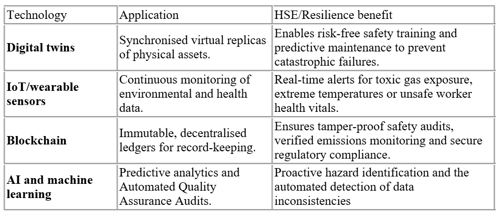
- Risk identification through cyber-physical systems: The integration of Digital Twin Synchronisation and AI-driven analytics allows for real-time simulations.
- Safety culture and psychological safety: Building a safety-first DNA requires executive leadership to foster transparency. This includes the gamification of safety training, peer-to-peer safety audits, and real-time, anonymous reporting tools to ensure workers can raise hazards without fear of retaliation.
Inclusive infrastructure: Engaging every stakeholder
Inclusivity has evolved from simple consultation to stakeholder empowerment, increasing the autonomy of underserved groups to influence the decisions that affect their lives.
Key dimensions of empowerment
- Identifying the excluded: Modern programs utilise GIS mapping for land-use analysis to identify vulnerable groups, such as those without formal land titles, early in the planning stage.
- Designing for stress-free access: Innovation in inclusivity now includes simulation centers. These allow users with disabilities to experience boarding, alighting and transferring through a transport system in a stress-free environment before the asset is operational.
- Workforce inclusivity and equity plans: Modern project review panels should require the presence of all representatives to ensure that technical designs reflect the diversity of the community.
Innovation as a catalyst: Systems thinking and digital tools
Engineering 4.0 serves as a catalyst for resilience, though it requires balancing rapid technological shifts with regulatory constraints to move for a real-time compliance tracking.
Innovation impact in mega-projects
Real-world engineering insights (Sector snapshots)
The following anonymised snapshots demonstrate the practical application of these integrated principles across global sectors:
- Infrastructure snapshot: A major 26-mile sea-bridge development, utilising a series of tunnels and artificial islands, integrated smart sensors to monitor structural health. This led to an 80% reduction in travel time while providing real-time data to prevent accidents in a high-risk maritime environment.
- Giga-city snapshot: A city-scale ecological development utilsed Virtual Reality (VR) and biophilic design during the Front-End Engineering Design (FEED) stage.
- Renewable energy snapshot: Large-scale energy programs are increasingly adopting green engineering, substituting traditional steel and concrete for recycled composites and carbon-neutral building materials to meet net-zero targets.
The project manager’s playbook: Practical lessons
For APM practitioners, the following actionable strategies are essential for modern delivery:
- Balancing ambition with Reference Class Forecasting: To overcome optimism bias, use Reference Class Forecasting to estimate outcomes based on similar historical projects. This ensures that time and budget contingencies are grounded in evidence rather than aspiration.
- Cultivating psychological safety: Implement real-time, anonymous worker help lines and female-led engagement teams. This ensures that grievances are addressed proactively and that marginalised stakeholders have a formal mechanism to influence technical design.
- Structured innovation budgeting: Avoid technological adoption for its own sake. Implement innovation budgets and conduct digital transformation audits to ensure every tool from IoT to AI delivers clear operational value and mitigates "fail slow" risks.
Conclusion: A call for shared learning
Safety, inclusivity and innovation are not competing priorities; they are synergistic pillars that determine the resilience of our built environment. By integrating climate-adaptive designs and prioritising human-centric empowerment, we ensure that our mega-projects deliver lasting value to society.
Reflection prompt: How has your program utilised digital twin synchronisation or inclusive GIS mapping to identify risks that traditional "Iron Triangle" management might have overlooked? I invite community to share their insights on integrating digital maturity with stakeholder empowerment in the comments.
You may also be interested in:
- Championing and promoting innovation in UK megaprojects
- What is stakeholder engagement?
- Cultivating psychological safety and a growth mindset culture

Arsalan Qutbi is Subject Matter Expert specialising in delivering high-impact projects across multiple continents. Alongside his industry leadership, Arsalan contributes to global professional standards and sector development through research, thought leadership, and academic teaching. He designs and delivers high impact learning experiences for emerging project professionals and regularly publishes practice based insights that bridge the gap between theory and real world application. His recent work explores the intersection of AI and education, focusing on how technology can enhance learning, assessment, and professional development.
Arsalan is recognised for advancing best practice in programme delivery, strengthening governance maturity, and championing innovation in project management education. His contributions support both industry and academic communities, positioning him as a valuable voice in shaping the future of project delivery and AI enabled learning.
0 comments
Log in to post a comment, or create an account if you don't have one already.