
Going beyond SMART and MOSCOW to achieve clear ‘well-formed’ project outcome webinar
If outcomes aren’t completely clear at the start, delivering a project becomes increasingly difficult. Setting achievable outcomes means going beyond conventional tools. In this webinar presented on Wednesday 24 June, we show how.
Research tells us that roughly one-third (33%–37%) of project failures are directly attributed to a lack of clear goals or outcomes.
If outcomes are not completely clear at the start, delivering the project starts from unclarity – and often becomes more difficult to deliver. Business Case benefits may not be realised.
Using SMART or MOSCOW have been standard methods to clarify objectives and deliverables for many years; but they have shortfalls and are often only used at the start of a project, then discarded.
In this webinar we showed how to go beyond traditional tools and deploy a standard system known as ‘Well-Formed Outcomes’ to analyse and bring clarity to project outcomes, not just at the start, but throughout the project lifetime.
This introduces the power of positive definition, clear intentions and the desire to succeed and takes account of the ecology of the project within its domain.
Our speaker practitioners explain how to define and use Well-Formed Outcomes, to go smarter than SMART.
Webinar resources
Sophie and Tim have kindly allowed their presented material to be made available for viewing. The webinar recording on Vimeo, and slides on Slideshare, are now available in our APM resources area and also embedded below for reference.
This webinar content is suitable for professionals with any level of experience.
Presenters
Sophie Vyse, Business Coach
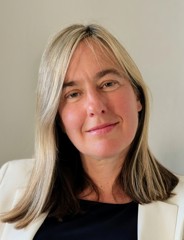 Sophie Vyse is a Business Coach who uniquely combines her psychology expertise with over 20 years of hands-on experience in Agile transformation. Through her work with organisations, ranging from tech giants like Google and M&S to dynamic startups, Sophie discovered that the difference between projects that deliver and projects that disappoint often comes down to one thing: whether the outcome was truly well-formed in the first place.
With her experience across Retail, Financial Services and Health, she helps leaders navigate organisational change, enhance performance, build better teams and improve wellbeing. She is passionate about what makes the "dream team", including psychological safety to promote inclusivity and innovation.
Sophie believes that the NLP framework of Well-Formed Outcomes gives project managers a powerful edge: a way to move beyond the limitations of SMART and MoSCoW and define goals that people genuinely own, that anticipate unintended consequences, and that are specific enough to actually guide behaviour.
Tim Lyons, APM People Interest Network Lead
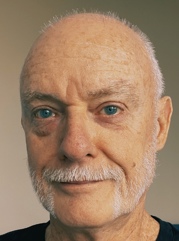 With a background in projects spanning more than 40 years, Tim has worked as a project consultant specialising in the outcome-focused delivery of large, complex, multi-disciplinary programmes. Along the way, Tim has experienced and
used some of the traditional tools that project managers and sponsors use to define outcomes, some more successfully than others.
His first career was in broadcasting, where he designed and built commercial radio and multi-track studio complexes in Manchester, Cardiff and Bristol, latterly working behind the microphone as a presenter and programme producer.
Tim now writes and presents extensively on matters relating to the human and neurological aspects of projects, including communication, ethics and coaching. He holds an Honours degree in Philosophy, a master’s degree in Coaching and NeuroLinguistic Programming (NLP) and is an NLP Master Practitioner and International Coach. He is the APM People Interest Network Lead volunteer, and an APM Fellow.
0 comments
Log in to post a comment, or create an account if you don't have one already.