

| Confidence in deliverability
Business leader confidence levels in ability to deliver projects successfully remained remarkably consistent throughout 2025. But the start of 2026 saw a significant fall. The decline was not consistent across all sectors, however, with some industries seeing a dramatic drop while others had only marginal reductions.
How confident or unconfident are you in your organisation's ability to deliver projects successfully? (Net results)
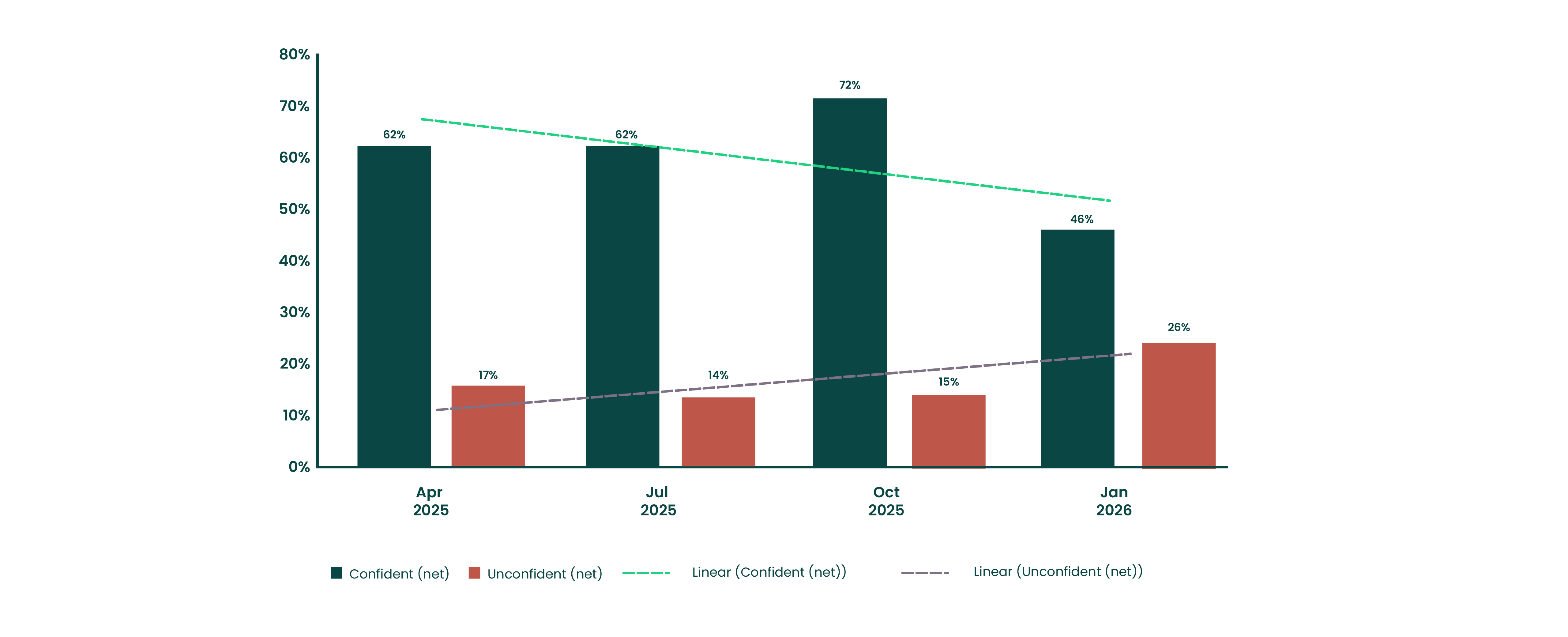
*Figures rounded to the nearest 1%
Percentage of respondents by industry sector who say they are confident in their organisation's ability to deliver projects successfully
Responses by sector
| Industry sector | Average across the year 2024-25 | Average across the year 2025-26 |
| Construction | 61% | 49% ↓ |
| Engineering | 69% | 51% ↓ |
| Financial services | 62% | 59% ↓ |
| Healthcare and pharmaceuticals | 67% | 60% ↓ |
| Legal | 69% | 53% ↓ |
| Technology | 83% | 75% ↓ |
| Telecoms | 61% | 70% ↑ |
| Transport and logistics | 75% | 70% ↓ |
*Sectors with a minimum of 20 survey respondents per quarter
Responses by number of employees
| Industry size | Average across the year 2024-25 | Average across the year 2025-26 |
| Less than 50 | 64% | 60% ↓ |
| Between 50-100 | 63% | 58% ↓ |
| Between 101-250 | 68% | 63% ↓ |
| Between 251-500 | 67% | 58% ↓ |
| Over 500 | 70% | 65% ↓ |
Engineering saw the steepest decline in confidence, falling from 69% in 2024-25 to 51% in 2025-26. Construction and legal also dropped by 12 and 16 percentage points throughout the same period, respectively. While technology was still the most confident sector in 2025-26 at 75%, it still saw a decrease from 83% in 2024-25. Interestingly, Telecoms was the only industry sector to see an increase in confidence, rising from 61% to 70%.
“The dip in confidence at the start of 2026 mirrors what many of our clients are telling us: the operating environment has tightened, and businesses are having to be more deliberate about how they structure and resource major change programmes. From a legal perspective, we see the consequences when projects run into difficulty, whether that is contractual disputes arising from poorly scoped supplier agreements, employment issues as teams are restructured, or data and technology arrangements that were not adequately documented at the outset.”
Sebastian Jones, Partner at law firm Thomson Snell & Passmore.
The data suggest that this confidence loss isn’t just a dip, but a reaction to a widening skills gap, with businesses not investing enough in the ongoing training/professional development of the people delivering the transformations necessary for strategic success. This increasing lack of internal development and skills has been exacerbated by resource constraints and inadequate funding for projects, which has resulted in businesses being “more deliberate” in how they approach projects and programmes.
While larger organisations (over 500 employees) were the most confident at 65%, medium sized organisations (251-500 employees) saw the biggest drop in confidence throughout the same period, likely due to being more exposed to these resource and recruitment challenges than larger organisations. The decrease in confidence in the technology sector suggests that, as AI became more integrated into everyday workflows, it moved from hype to reality. This technology has been full of promise, but as it slowly becomes integrated into workflows, the actual impact of AI is not as revolutionary as once anticipated – at least not yet.
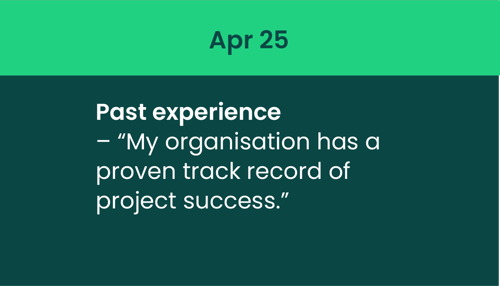
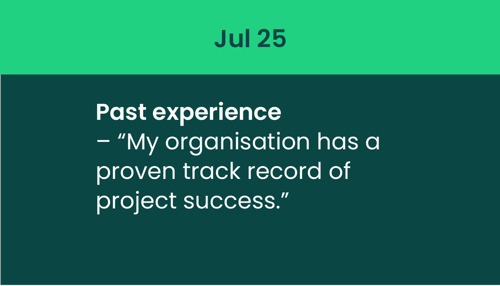
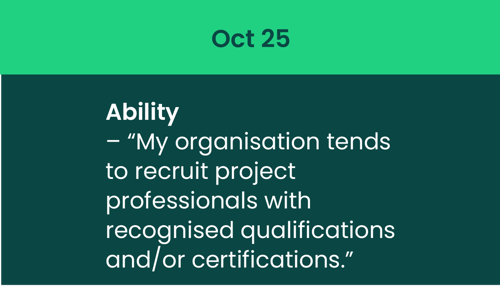
Over the last 12 months, we asked business leaders who are confident in their organisation’s ability to deliver projects successfully what the main reasons are for their confidence.
Most-chosen answers from survey respondents
We also asked those who are not confident in their organisation’s ability to deliver projects successfully why they felt this way.
Most-chosen answers from survey respondents
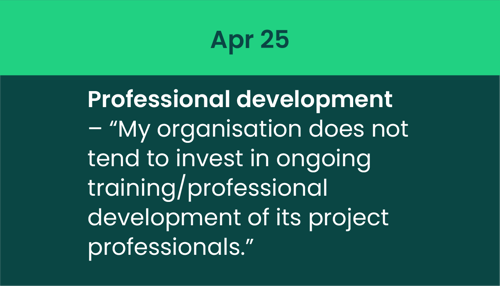
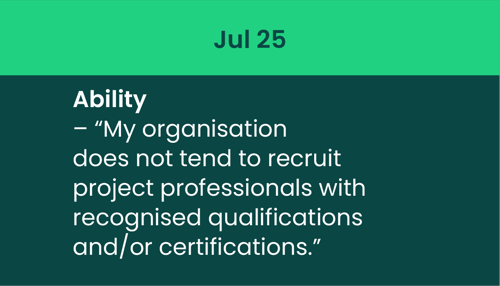
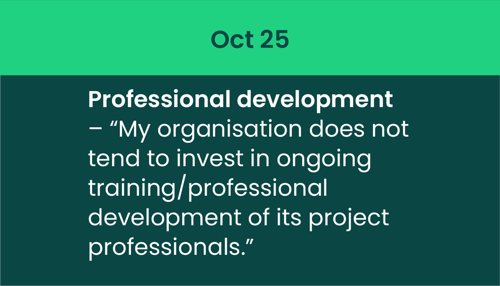
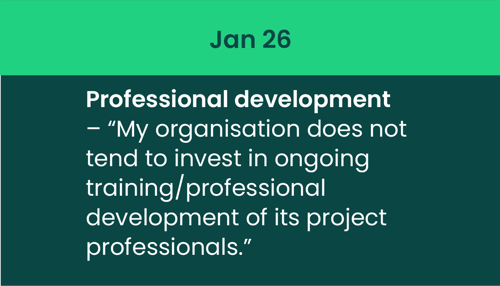
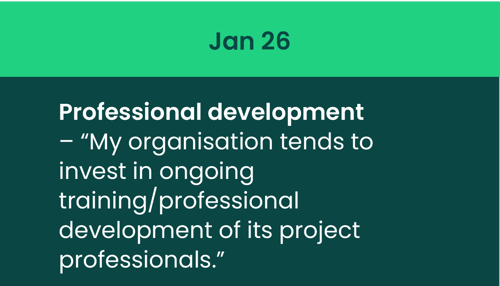
This data reveals a significant shift across the year. There has been a clear transition from a reliance on past experiences towards ability, recruitment and professional development. This transition suggests that, as the business landscape has changed, confidence became rooted in having trained professionals and continuous learning as opposed to relying on past ability, further highlighting how disruptive this period has been for organisations. This shift may have been brought about by technological disruptions, particularly AI integration, which has rendered past experiences less relevant than current ability and up-to-date training.
Interestingly, professional development (or a lack of it) was also cited as the main reason why people felt unconfident in their organisation’s ability to deliver projects successfully. This data was consistent throughout the whole period, suggesting that this is an ongoing need. By January 2026, professional development – either as a strength or a need – was identified as the defining reason why business leaders felt either confident and unconfident in their organisation’s ability to deliver projects successfully.
This result offers an interesting theory: Confident leaders are hiring project professionals with recognised qualifications and certifications (October 2025) and developing them (January 2026), while unconfident leaders are focussed on the lack of investment and development of current project professionals. All this suggests that upskilling is becoming an increasingly important factor in an organisation’s ability to deliver a successful project.
Future focus
Preliminary survey responses from April 2026 indicate confidence levels among senior leaders are rebounding, with 87% of respondents saying they are confident in their organisation’s ability to deliver projects successfully.
Among respondents who are confident, the most-cited reason why is due to high quality of leadership within their organisation (22%), followed by professional development (19%).
Leadership is also emerging as the most important skill for project professionals, according to leaders whose organisations are recruiting. This emerging emphasis on leadership may be a reflection of the need for stability in the wake of the economic shocks caused by conflict in the Middle East. Also, businesses that are experiencing growth are finding leadership important for providing direction and inspiring confidence in delivery.
“At Ridge, leadership is what connects strong culture with great teamwork and strong delivery. As the business has grown, we’ve seen that confidence in project outcomes isn’t driven by process alone, but by how leadership is exercised day to day-through clear direction, decision making, governance and consistency.
“When leaders create clarity, direction and alignment, teams are better equipped to navigate complexity, set clear goals, manage risk, and deliver work to a high standard. That focus on leadership capability, alongside clear ways of working, has been central to building confidence in delivery across the business.”
Nicky Dixey, Chief People Officer at built environment consultancy Ridge and Partners LLP