
Cathedral projects: in for the long haul

Long-term projects, from cathedral builds to nuclear fusion, show how leaders must combine purpose, progress and adaptability to keep people committed to work that may outlast them.
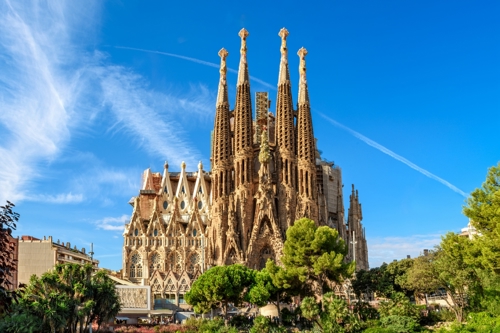 Image credit: Shutterstock
Perhaps you have already heard about cathedral projects? Margaret Heffernan, author of Wilful Blindness and Uncharted: How to map the future together, recently mused on the subject in her ‘On the Level’ Substack, reminding us that it’s been a decade since physicist Professor Stephen Hawking coined the term.
Cathedral projects are meaningful projects started by one generation in the expectation that future generations will pick up the baton. Two good examples are Paris’s Notre-Dame, which took 97 years to build (three lifetimes during the 13th century, when work was completed), and Antoni Gaudí’s Sagrada Família cathedral in Barcelona, the exterior work of which was finished earlier this year, 144 years after construction began.
Projects with purpose (that last and matter)
“When successful, what seems to keep [cathedral projects] on course is a seemingly paradoxical combination of determination and flexibility, together with broadly shared principles demanding that the best be allowed to emerge and be improved over time,” writes Heffernan.
“The leaders of such projects map the future not by trying to pre-empt, co-opt or nail it down, but by believing in it, confident of exploring whatever awaits finding. With aspirations too great for an end date, such institutions sustain people by making them feel important, doing work that lasts and that matters.”
The rebuilding of Notre-Dame six years after fire ravaged it in 2019 prompted French President Emmanuel Macron to declare it the “building project of the century”. It had an ambitious five-year completion date: in time for the Paris Olympics in 2024 (and the project only overran by five months, disrupted in part by the COVID-19 pandemic).
General Jean-Louis Georgelin, France’s former Chief of Defence Staff, was tasked with leading the rebuilding project, and referred to the project as the “battle for France”. Under him, the rebuilding “became a formidable machine”, wrote Agnès Poirier, author of Notre-Dame: The Soul of France.
“We understand what Notre-Dame represents for us all, and there is no reason why we should fail in our mission. We will do it! Vive la France!” Georgelin told a group of workers on the project.
Moving with the times
APM Vice President Antonio Nieto-Rodriguez told Project that the success of the Notre-Dame rebuild was 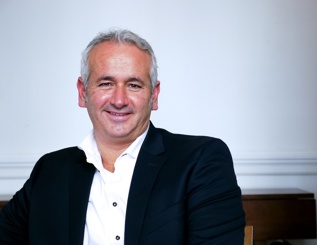 down to “a strong purpose, precise stakeholder alignment and the seamless integration of ancient craftsmanship with advanced technologies. It is a reminder that great projects are about more than just deliverables – they’re about uniting people under a shared vision, honouring the past and leveraging the best tools of the present to build something enduring. It’s this blend of purpose and structure that makes it so remarkable,” he explained.
This cathedral project reboot married traditional and cutting-edge tech, something projects that endure over decades need to master, as the environment in which you start a project can alter considerably over its lifetime. What worked or was needed in year one might not hold true for year five, 10 or 20.
For the rebuild of Notre-Dame, technology like drones, augmented reality, 3D scanning and Building Information Modelling was used to create a digital twin for the precise planning of the works. The most detailed 3D scan ever done on a historical building was produced.
“Imagine how you build a 3D scan with people doing the work with their hands, using techniques that are hundreds of years old,” marvelled project management commentator Ricardo Vargas at the time. “It’s something we should be very proud of – where innovation and tradition were able to coexist in such a massive project.”
Heffernan visited the Managing Director of Sagrada Família’s construction project, Xavier Martinez, in the project office back in 2017. She asked him if the completion date would be met.
“It is really a challenge, but you never know,” he told her, smiling. “The story can always change. But you fall in love with the challenge. There’s meaning in the work. My work will be there for hundreds of years… If I were a manager at Microsoft or Google, my main preoccupation would be my salary. At Sagrada Família, that isn’t important. What is important for us is a higher idea. We need self-discipline. We need self-criticism. We need to do whatever we do better always.”
A powerful cathedral project right here, right now
Closer to home and underway right now is the cathedral project of creating a sustainable and commercial nuclear fusion energy source that can power the UK into the next century (a cause Professor Hawking championed). The UK government announced its domestic £650m Fusion Futures programme in 2023, which includes investment for the build of STEP (Spherical Tokamak for Energy Production), a prototype fusion power plant in Nottinghamshire, due to come online around 2040.
The Programme Director of STEP Fusion is Dr James Cowan, who is also UK Fusion Energy Interim Chief Programme Officer.
“The endgame of fusion – which is all purpose driven – is safe, secure, clean and abundant energy,” he says, adding that this endgame is decades away. “A lot of people come to fusion for the mission, the purpose that we will change the world.” While the goal is incredibly inspiring, he says you have to keep everybody motivated on the journey.
While some people are motivated by doing their little bit for the end state, Dr Cowan explains that “doesn’t really cut it. You need to demonstrate meaningful progress on the journey, not only to keep the motivation going of the people working on it, but to keep the support going of everybody else”. This includes everyone in the international fusion ecosystem. “They want to see traction and progress. They need to see value and benefit on the journey. Nobody's going to give you billions of pounds and then say: come back in 20 years’ time,” he says.
Marrying ambitious aspirations with ROIs
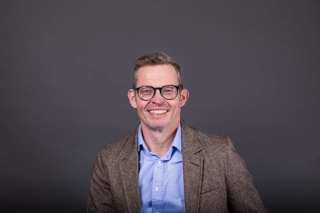 “You have this dichotomy in your head with these sorts of cathedral projects in that a lot of people are interested and excited and come to work because of the opportunity in 20 years’ time, but the people who are going to pay need to see returns,” says Dr Cowan.
He manages this by treating the programme as a series of discrete packages of value generation that build towards the overall outcome.
“You have to hold both things in your head. It’s hard, because sometimes, with a lot of the people who are really passionate about the end state, you have to turn them down a little bit, because there’s not enough money at the moment to just keep them doing what they want to do, because you need to do something else on the journey.
“Sometimes what you have to do to keep going now makes it look harder to get to the end bit, and that’s where you have to manage those tensions,” he explains.
He likens his approach to putting out agile-style releases showing progress through the delivery of capability increments. “Once we have all the system capabilities, we have the supply chain, then we can go and do marvellous things. People get really enthused about it,” he adds.
For example, STEP Fusion has a team establishing a test centre in West Burton in Nottinghamshire where the plant will be built.
“We have a whole load of people whose goal is to get that test facility up and running, which is massively important for fusion,” says Dr Cowan. That team is motivated by working on that. Other teams are enthused about getting the site ready, or working on high-powered computer modelling and artificial intelligence to help with the plasma.
“Everybody's enthused about their bit, and most people are enthused about all of it. That’s what you have to do with the mindset. You have to build these teams that are really focused and driven about the now, but also understand that future state,” Dr Cowan reiterates.
Win everyone over with the right story
One of the critical aspects to making the programme a success is through strong storytelling, explains Dr Cowan.
“You have to tell the big-picture story. You have to talk about building an industry, exporting jobs, saving the world. You have to talk about that, but passion doesn’t get major programmes delivered. You need some really important, but boring, policy and process. You need to have enough of that to keep things going where you want to without dampening down the passion, so what you do is tell big stories, internally and externally. Then, as much as you can, you demonstrate your progress towards that through things that are also meaningful in and of themselves – so it’s meaningful steps on the journey.”
Want more? Read James Cowan’s article ‘Nuclear fusion: from possibility to delivery’
Inline image: Antonio Nieto-Rodriguez; James Cowan
This is a free Project article. Browse more articles here. Not a paying member? Join today

Emma De Vita is editor of Project, the official magazine of the APM that’s available to all paying members.
0 comments
Log in to post a comment, or create an account if you don't have one already.