
How to create high-performing teams

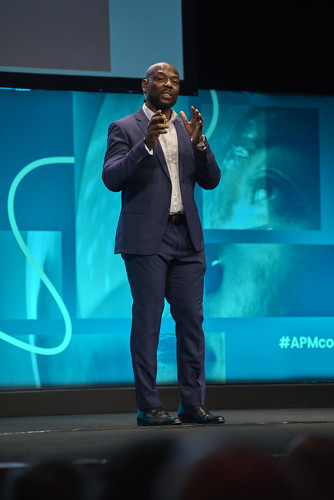 Eddy Datubo FAPM, Director of Transformation at the BBC (and Project Big Interview in our spring 2026 issue), tackled the hot topic of high-performing project teams at the APM Project Management Conference 2026.
“Why are projects not performing?” he asked the audience. “We’ve been told project execution is all about structure, governance and control, but it’s really about teams that can deliver,” he said. When it comes to poor project execution, he believes that this is not a process problem, but a people problem.
Datubo cited APM’s Dynamic Conditions for Project Success report, which found that 92% of the project professionals surveyed said team ethos was key to project success.
It’s all about the relay baton
There’s much to learn from the world of sport, particularly athletics, with Datubo talking about the inspiration he gets from the 4 x 100m relay: “It’s a very good example of high-performance teams on an athletics track. The world record for the event is held by Jamaica’s London 2012 Olympics winning team. The split time was 9.2 seconds for each team member, which is faster than the world record for the individual event.
“Every member ran a world-beating time to be able to achieve success. That is the team performing at its best,” said Datubo. It’s an example of when the whole becomes greater than the sum of its parts.
Drawing from his own experience growing up in Nigeria, he often rubbed shoulders with a university athletics team that was continually high-performing and that was able to deliver excellence because each of the team members was committed to creating something bigger than their own performance. “They had a bigger purpose as a team,” Datubo explained.
Interestingly, the most important member of the team, he found out, was the baton, which in effect was the mission of the project.
“They’d take the baton into the team meeting and have it at the centre of the meeting. They had to respect the baton; they had to guard that baton.” They were all committed to the mission, clear what the goal was, and everyone knew what they were doing.
With this in mind, Datubo has created his five conditions for project team high performance:
- Having the right resources
- Having clear goals
- Having an enabling environment
- Having a committed team
- Having deep connections between the members
“When projects are set up, you think about the resources you need, but leaders don’t really think about the other conditions for success. How do we ensure the goals are clear, the team is committed and they understand why they are here? How do we create an enabling environment for everyone to perform?” he said.
Datubo also identified three powerful forces that drive high-performing teams:
- Clarity. Without clear goals, outcomes and deliverables, you don’t get project success, said Datubo. Clarity means getting a team to understand the mission and its role in it. Ask yourself: do we have the right team? Who is on our team? What are their strengths and weaknesses? Who is our coach? Is our sponsor engaged? What’s also critical is having clarity on why the project matters.
- Connection. This is about trust. Are we open, honest and accountable? Do people feel included and that they can speak up? Can people contribute freely and openly admit mistakes? If not, issues with the project may surface late, and risks may be hidden, said Datubo. His advice to his teams is to always give bad news when he still has time to react to it.
- Commitment. Do we feel ownership, not just responsibility, of the project? Do we believe in the project we have been asked to deliver on? Has it been forced upon us or do we feel committed to the cause? “So many times, the failure of senior executives is that they decide on a project and feel committed to it, but fail to convince the rest of the organisation and the delivery team on why it is important and why they need to feel committed to it,” said Datubo.
Designing a high-performing team
You don’t start with a design for a ‘high-performing team’, said Datubo. “You start by saying you want to design a team that is successful, and then you create the conditions for success and enable that team to become high performing.”
Here are his five ingredients to achieve this:
- Have a shared purpose. Help people understand the ‘why’ of the project.
- Have absolute clarity. Be clear on the goals and what success means.
- Have a safe environment. Ensure people can speak up, they feel able to do their best work and don’t hide the true status of a project.
- Have healthy tension. High-performing teams are not always comfortable, explained Datubo. They have issues and friction, and debate these with respect and within the right remit. What this means is that people can be their true selves on the project team and trust each other. “Don’t be scared if your project team has tensions – use that respectfully to build the performance of the team,” he advised.
- Have clear accountability and ownership. So many times, we go into a project where ownership is not clear, Datubo reflected. Everyone has a part to own and is responsible for the project, and it matters to be clear on who has the decision-making rights and for what.
The final point Datubo made was that high performance on a team means enjoying sustained success and building consistency, rather than winning one-off successes. This is reliant on achieving clarity, so next time you’re with your project team, suspend the plan for the meeting and ask them: are we clear about our goals and the direction we are going in? Are we aligned? Are we connected and committed?
“The truth is that clarity creates alignment, which creates connection, which creates commitment, and that creates the performance you expect to see,” he said.
Read Eddy Datubo FAPM's Big Interview 🔒
This is a free Project article. Browse more articles here. Not a paying member? Join today

Emma De Vita is editor of Project, the official magazine of the APM that’s available to all paying members.
0 comments
Log in to post a comment, or create an account if you don't have one already.