
Lessons from APM’s Chartered Project Professional of the Year
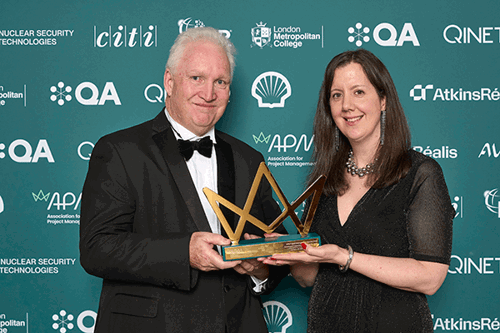
Tamsin Alli-Balogun ChPP, Associate Director for Operations Management at AtkinsRéalis, is the winner of the 2025 APM Chartered Project Professional of the Year Award. We caught up with her to find out her most important career lessons (and the secrets to her success).
Q: Which projects are you working on at the moment?
Tamsin Alli-Balogun ChPP (TA): My projects focus on improving operational excellence and introducing new ways of working. They range from digital technology rollouts, introducing new management approaches, to strategic reviews of how we deliver sustainability through our projects. In 2025, I’ve focused on one large project. Working with colleagues from our India offices, I led the definition and rollout of a new Project Support Office (PSO) service across 2,000 UK-based client projects. The goal was to increase standardisation and allow UK-based project managers more time to focus on project delivery. We’ve had many successes, but it hasn’t been without challenges. One of the biggest was forecasting the levels of service uptake month by month to ensure the new PSO team were kept busy – but not too busy – as we expanded the service.
Q: Congratulations on being named APM’s Chartered Project Professional of the Year! How has becoming Chartered affected your work and career?
TA: Achieving Chartered Project Professional status is all about credibility. It’s a high bar, as it requires a deep knowledge of project management theory, and experience of large and complex projects. Becoming Chartered has given me more confidence in my skills, especially when working with senior stakeholders. Employers and hiring managers are increasingly looking for ChPP as a mark of excellence.
Q: Which career achievements are you most proud of?
TA: This feels a bit like choosing my favourite child! But if I had to, I’d pick projects with direct sustainability benefits. I helped to launch the AtkinsRéalis Carbon Academy in 2023, which is a technical programme that we co-designed with the UK Green Building Council to increase our in-house carbon expertise. Almost 90 colleagues have graduated so far, and all are committed to applying their learning to increase sustainability benefits across our global portfolio.
Another project I’m proud to have led was the rollout of a new mentoring scheme in my organisation, where groups of mid-career professionals are mentored by a senior leader. Although I handed over the scheme management a few years ago, it is still going strong and has benefited over 120 colleagues so far.
Q: What have been your most important career lessons?
TA: In my early career, I learnt the hard way how important it is to be constructive and positive in a team. Being collaborative is the best way to quickly identify solutions that balance conflicting needs. It’s a skill that I’ve honed over the years, although bad habits can sometimes come back. I still sometimes excitedly run off with a ‘good idea’, forgetting to take the team on the journey with me. Thankfully, I work with colleagues who are good at pulling me back when needed.
Another lesson is the importance of building a strong network beyond my immediate team. I highly recommend joining APM and getting involved at the earliest opportunity. You don’t need permission to volunteer in your own time or to connect with people outside your immediate circle. Putting my hand up to support the wider project profession has opened a lot of doors for me, growing my confidence and skills – as well as helping me to win Chartered Project Professional of the Year.
Q: What have been the most important project management lessons?
TA: I’ve always been keen to apply best practice in all aspects of project management, with a strong focus on governance and processes. In my early career, I sometimes had to be reminded that project management tools and documents are a means to an end – not an end in themselves. Projects are about creating value, so the outputs, outcomes and benefits are the most important thing. Processes and governance are important, because they enable us to get to that end point in the most effective way.
I have also learnt that you can’t always appease everyone, and effective stakeholder engagement includes managing people’s expectations. Navigating conflicting stakeholder priorities can be one of the hardest parts of project management. Having a strong network and access to mentors can be very helpful in working out how best to manage difficult stakeholder situations.
Q: Looking back over 2025, what have been your biggest successes? And what were the things that didn’t go so well, but taught you valuable lessons?
TA: The PSO rollout has been very successful in growing from a small pilot to achieving full coverage across the business. Despite best efforts in the planning stage, during rollout there were some circumstances where the processes didn’t quite work in the way we expected. Adopting a strong data focus helped us manage these setbacks, as we were able to quickly identify where the processes were working well and where we needed to change and adapt. I am very proud of how the team maintained a strong focus on quality management to ensure we kept adapting and improving the service.
From a career perspective, I have continued to build on my volunteering. I was very pleased to be selected as a member of APM’s Volunteer Delivery Group, allowing me the chance to channel my voluntary efforts to make a more strategic contribution to the project profession.
Q: What career advice would you pass on?
TA: When I first moved into an engineering team about 10 years ago, I felt outnumbered and self-conscious as the only project manager in the team. As I continue to grow in my career, the better I understand how important project management skills are. Project professionals are experts in creating the structure that brings together technical expertise and innovative technology – at the right time and in the right order. So, my advice is: be confident in how much of a difference you can make as a project professional. Society needs great minds like ours.
Read more about the winners of the 2025 APM Project Management Awards in the winter 2025 issue of Project journal.
You may also be interested in:

Emma De Vita is editor of Project, the official journal of the APM that’s available (free!) to all members.
0 comments
Log in to post a comment, or create an account if you don't have one already.