
How to boost your strategic value as a project manager

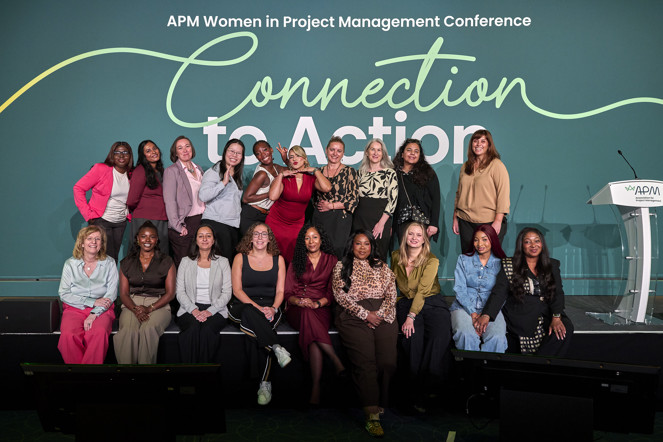
Moving from task doer to value creator means understanding strategy, building influence and staying calm under pressure, as speakers at the APM Women in Project Management Conference explained.
Even if you’re a proficient project manager, there will come a point where what served you well once will no longer serve you best in future. If you’re looking to rise to the top of your profession, you will need to get strategic. This means understanding and delivering on strategy, which and requires a different set of skills than those you may have perfected on your way up.
This was a theme at the centre of the sold-out 2026 APM Women in Project Management Conference, held in September.
At the conference, Steph Illingworth, Project Director at Turner & Townsend, spoke about how to deliver a strategy effectively. The first thing to contend with, she said, is to understand what the strategy is trying to achieve.
“Do we really understand the problem that we’re trying to fix properly? How is it going to make a difference?” she asked to the packed room.
It’s also about how well you communicate that message. “Sometimes we are too risk averse,” she said – afraid to share too much, or worried that there’s not enough information to give to people yet – so we decide not to say anything at all. “The whispers start that there’s something coming down the line. They’ve not been informed, so that just creates nervousness. People are anxious, and automatically you’ve got resistance before you’ve even started.”
What’s in it for me?
Overcome this by finding a compelling, exciting vision statement so that people will know that their lives will be made easier by delivering the strategy. ‘What’s in it for me?’ is the question you really need to answer. “If you hook people in from the very beginning, you’ve got a better chance of a soft landing,” said Illingworth.
Naturally, it pays to have project professionals involved from the beginning of – and all the way through – a strategy. “Being involved at the very beginning to help communicate, to help shape it, to help make sure that problem statement is addressed is really important,” said Illingworth.
Governance is vital, too. “Is it your friend or your enemy? It can be the best thing, but you can also feel like it’s treacle… The governance needs to be really flexible, and it needs to allow the people who are delivering the strategy to be able to pivot and stop.”
Thinking strategically means asking everyone to focus on the outcome, “whether that outcome or strategy is going to benefit your function or not”, she said.
“You need to think about how you’re going to share that incentive and set it up properly. [If you don’t] then it creates unhealthy competition… It’s about how can you align your incentive mechanism so everybody’s got skin in the game.”
Believe in yourself
Krystina Pincott, Head of Transformational Delivery and Change at PRS for Music, spoke about the strategic value of project leadership, and how to elevate project leadership as a strategic capability by strengthening executive relationships, influence and organisational impact. She focused on removing barriers and feelings of intimidation as a project professional when you are interacting with senior stakeholders.
“A takeaway from today is to really focus on believing in you,” she said, explaining that our inner voices are often our worst enemy. “Have that quiet belief and knowledge that you’ve learned your craft, you’ve earned your position and you deserve your place at the table and in the world. I would urge you just to own that and think about that next time that little voice of doubt starts to creep up in your head. Let’s work to quieten that voice,” said Pincott.
It can feel daunting when you start working alongside senior leaders, but remember, said Pincott: “We are all human. It’s OK to show your vulnerabilities. It works well to establish a genuine relationship. We often fear sharing or opening up a little bit about ourselves.”
This doesn’t mean you have to compromise on creating a sense of gravitas. “Gravitas is having the confidence and the knowledge in yourself to create confidence from others in you. It’s about believing in yourself, showing up as yourself.”
Be the calmness in the eye of the storm
Another piece of advice Pincott gave about dealing with senior leaders is to know that they want calm. “They don’t want chaos. When things aren’t working well, they want that confidence, that calmness, to know that you’ve got things in hand. Think about that the next time you’re having one of those difficult meetings, when you know something’s going wrong on a project. Perhaps think about how you can project calm to build that sense of confidence in you from your stakeholders,” she said.
Work on being consistent, too. “Do what you say you’re going to do. Don’t make excuses… Be consistent, because when you’re consistent, people know that they can trust you. They know that they’re going to get an answer,” Pincott said.
Also, choose courage over comfort – speak up, put yourself forward, be curious and ask questions. “Have the courage to put yourself out there, because you never know what might happen when you do so,” she advised.
Finally, think about what leaders want to hear from you.
“When we think about highlighting the strategic value of project leadership, we can sometimes fall into the trap of talking about how we do things,” Pincott said. “Actually, the ultimate value we bring is the value that our projects deliver, and that’s the bit that people pay attention to. It’s what we deliver. Senior leadership is interested in value and outcomes. That’s what they want. Are we getting the outcomes that we need?”
How to go from task doer to value creator
Picking up on this theme, Sarah Jackson, Head of Project Management Practice for Business Change at Pacific Life Re, explained how to go from being a task doer to a value creator.
“When I talk about creating value, I don’t mean doing more. I mean understanding the outcome, trying to make better decisions and helping the people around us get somewhere,” she said.
Understand why the work you are doing matters. “Recognise what you’ve done to contribute to that value. Delivery is the foundation, but it’s not the destination,” said Jackson. Task doers tend to report the facts, whereas value creators ask ‘Why?’, ‘Who cares?’ and ‘So what?’ They think beyond the delivery plan.
“Project performance and project value are not always the same thing. Project performance generally tends to be about time, cost and scope, and it’s how we’ve always worked… But we need to be capable of holding two conversations at once. We need to be talking about how well we’re delivering the project, whether we are still creating that value and that outcome for the business, and why we’re doing it in the first place,” Jackson said.
What it takes to be an influencer
Learning how to influence starts with understanding the organisation, the person and the relationship you have with them. “Influencing is about helping people move in a direction because they understand or they trust and believe in it, rather than because they’ve been told to do something,” Jackson explained.
One tip she shared is to escalate matters only when you genuinely need to.
“When I do that, the relationships land better. You build the trust and credibility with people. This is not about soft skills… It’s about being effective. Some of the best project managers I’ve worked with didn’t have the best plans; they were the best at relationship building. They knew what mattered to other people, and they knew how to bring them along on the journey,” said Jackson. One of the ways you can do this is through effective storytelling. “That’s powerful because we’re all storytellers, whether we know it or not.”
It also means telling the right story to the right people: different things matter to different people.
“You’ve got the sponsor who is probably going to be thinking: are we still going to get the value? You’ve got your line manager or middle managers who are thinking: there’s another project I’ve got to get the team through. You’ve got the end users who are asking, ‘What is this going to mean for me?’ And then you’ve got the project team, who are usually killing themselves for a date that’s maybe not even going to happen.”
These are completely different worries that require completely different narratives and communication from the project manager, said Jackson.
“I always say that people don’t respond to what you say; they respond to what they hear. So, it’s really important to think about what matters to your stakeholders when you’re influencing. Understand who’s receiving the message. What would they be interested in hearing about? What do they care about? Why are they going to care?” Jackson continued. “When we move to a value-creation mindset, we understand this.”
Context matters, and so does emotional intelligence
If you are keen to get to grips with the strategic side of business, Jackson recommended developing your business acumen, which simply means understanding the business context of the projects you are delivering. It means being able to understand why the organisation is spending money on the project, how it will be judged as a success and what it would take for it to be cancelled.
“If you don’t understand the business context of what you’re trying to deliver, you can still run the plan, you can still deliver it, but you’re going to really struggle to influence and to get the right decisions.”
It’s also worth working on your emotional intelligence, so that you can read the room, judge when to challenge someone and whether to bring something up in a meeting or an offline conversation to get the decision you want from them. It’s also about “managing the gap between what you feel in that moment when someone said something that you don’t agree with, versus how you act”. It’s about learning how to control your actions and how to remain calm.
Don’t think you have to shout to command people’s attention. “Some of the most influential project managers I’ve worked with, who have done a really good job at influencing and relationship building, have been quiet – introverted – which is great, because they understood the context, they listened and they understood what mattered to certain people in that room,” added Jackson.
Finally, Jackson advised: “Find visibility for yourself with the people that matter. Put a coffee in their diary.” So, what are you waiting for?
Enjoyed this article? Watch the Project Podcast episode ‘The secrets of being a great influencer’
This is a free Project article. Browse more articles here. Not a paying member? Join today

Emma De Vita is editor of Project, the official magazine of the APM that’s available to all paying members.
0 comments
Log in to post a comment, or create an account if you don't have one already.