
A trio of inspiring global projects from 2025 APM Award winner Arup


Arup, APM’s 2025 Company of the Year, was commended in 2025 for its strategy to “shape a better world” through safe, resilient and regenerative design, and to use project management to hold this to account.
There are three programmes and projects Arup has been working on that demonstrate how its strategy has been put into action: a reconstruction programme in Peru, a New York housing authority modernisation project and the UK’s National Grid Great Grid Update.
Peruvian post-disaster reconstruction
In early 2017, El Niño Costero brought devastation to Peru, particularly its northern and central coastal regions, where river basins can rise from sea level to over 4,000m in less than 150km. The sudden, relentless rain sparked by El Niño Costero caused flooding and mudslides, affecting an estimated 1.7 million people. Homes, schools and hospitals were damaged and destroyed, as were thousands of kilometres of roads.
In the wake of the destruction, Peru desperately needed to rebuild its infrastructure and create systems to prevent it happening again. In 2020, the UK Department for International Trade won a government-to-government (G2G) contract to partner in the reconstruction programme. Arup entered a joint venture with Mace and Gleeds as part of the UK Delivery Team (UKDT), leading the strategic engineering, flood defence planning and sustainable redesign of over 150 major infrastructure projects – including hospitals, schools, and early-warning systems for floods and landslides across 13 regions.
Arup’s projects span the globe, and while they range from transport and property to energy and water, each must be tailored to clients’ wildly divergent strategies. The Peruvian challenge illustrates just how well the work also drives Arup’s own vision: to pair design and engineering ambition with social purpose.
 “We’re working in a country that’s facing some huge climate impacts, with populations that are very vulnerable,” says Iñigo Ruiz-Apilánez, Arup’s Country Director for Peru and the Programme Director for the UKDT, who describes the work as “one of the greatest privileges of my life”.
“These are people in very remote areas who haven’t had proper healthcare or education services, where every time it rains, they’re left scared about what’s going to happen to their homes.”
One immediate task was to set up a PMO that could help Arup’s partners manage the vast programme. Simultaneously, as the team had inherited three years of recovery effort by Peru’s authorities, they had to ascertain the progress of each active project and launch new procurement processes. They were also charged with helping the public entity manage each of its projects in terms of programme cost, technical assurance, stakeholder engagement and risks. One issue was that of resistance among their Peruvian partners. Many felt that outside help had been imposed on them from above. Overcoming these doubts required building trust.
“When we started talking face-to-face and working together it had a huge impact,” says Ruiz-Apilánez. This programme was going to last 10–15 years, but we were just here to stay for a short time and then hand back to them. We had to convey that way of working, ensuring quality was among the main drivers of anything they were doing, while incorporating concepts like climate change into the designs.”
A huge shift
One issue facing the programme was that the models and designs developed by Peru didn’t account for climate change predictions.
“It required a huge shift to convince our partners to start looking at all the different studies in terms of climate change scenarios,” says Ruiz-Apilánez. “We needed to agree which may be more realistic, and to start including climate change as part of the designs and models.”
The Arup team also pushed to introduce sustainability as a consideration at the project level, in everything from sourcing materials to their choice of solution.
A prime example is the introduction of sustainable drainage. While the UK has been working to adopt natural systems as an alternative to hard grey infrastructure for over 20 years, it was still a new concept for Peru. The team developed a series of guidelines for creating sustainable drainage systems, not just in a desert context, but where funding for operation and maintenance is lacking.
As Ruiz-Apilánez points out, when working in a region that may lack the infrastructure needed for the most cutting-edge technology, true innovation often lies not in the individual solutions, but in how various ideas are integrated, especially when the lifespan of each project varies so dramatically.
“Our reforestation work is going to take 15–20 years to become mature enough to start having an impact,” he explains. “We also needed to offer short-term solutions in terms of river defences that protect the population, with drainage in the low and middle part of the catchment.”
Arup’s role in the sprawling programme is coming to an end later this year, when the team will hand over full control to their Peruvian partners. Independent research reported that UKDT’s projects there have supported 9,000 jobs per year through construction, while the works will contribute over $1bn to the Peruvian economy by 2030, and $23bn over the next 50 years by avoiding damage caused by floods and mudslides.
And most importantly, that difference can clearly be felt on the ground.
“One of the biggest impacts we’ve had has been to reduce the time it takes to complete projects here,” says Ruiz-Apilánez. “Normally a school took five to six years to build. As an average, we’ve done it in fewer than three. Hospitals or health centres were taking seven to 12 years; we’ve done them in three and a half. That means providing several years’ worth of services to communities who were desperate for them.”
 New York City Housing Authority
The Peru reconstruction illustrates how project techniques that are tried and tested in one region can be groundbreaking in others, and that these innovations really can change lives. This applies even in countries where the project profession is highly developed, such as the US.
The New York City Housing Authority (NYCHA) owns over 177,000 apartments across the city, thousands of which are in a state of disrepair. The bill for the backlog of work required, whether to deal with mould, asbestos, failing heating systems or elevator outages, runs to around US$78bn.
One of the responses to this staggering shortfall was for New York State to establish the New York City Public Housing Preservation Trust, opening the door to alternative finance and delivery methods to improve the city’s public housing infrastructure.
Arup was appointed to the programme in 2024, charged with setting up the PMO behind the programme’s groundbreaking approach – progressive design-build (PDB), which brings designers and builders together from the start of the process. While this is common practice in countries like the UK and Australia, it’s still largely untested in the US, especially on the east coast.
“A lot of suppliers in this market have never done PDB before,” says Holly Mee, Programme Manager for the work. “As we are experienced in the procurement methods involved, we’re having to educate the supply chain in terms of how to act.”
Building resilience
Mee is quick to stress the purpose behind the project, which binds the Trust’s mission with Arup’s vision.
“It’s about building resilience in communities and improving quality of life for New Yorkers,” she says.
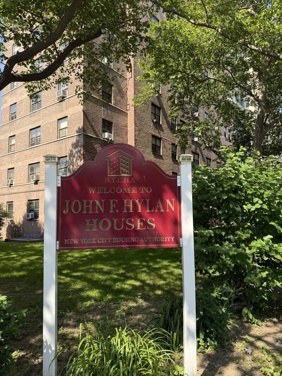
As well as creating the overarching programme, structures and processes, Arup manages the comprehensive modernisation of Hylan Houses in Bushwick, Brooklyn, a 19-storey residential building which serves as the pilot project for the Trust PDB model. Improvements there are likely to include kitchen and bathroom renovation; accessibility; ventilation; heating, plumbing and electrical system upgrades; hazardous materials abatement; and improvements to pest and waste management.
As with aspects of Peru’s Reconstruction Programme, the Arup team has found itself partnering with the Trust to educate its stakeholders on the benefits, particularly those who were wary of PDB as a procurement method.
“People are used to having a certain level of authority and an overview of how the procurements are run and how the designs are developed,” says Mee. “Many were saying they need to be involved in every step – while also warning they didn’t have the resources to be.
“Working with the Trust, we had to understand where its stakeholders were coming from, and inform them how the procurement method would work, what it could do and how it would ease the pressure on its capital programme. Plus, ultimately, how it would ensure that the quality of life for residents of these properties is greatly improved.”
 National Grid’s Great Grid Upgrade
This end-to-end thinking can be found driving another innovative Arup project: National Grid’s Great Grid Upgrade, the largest overhaul of Britain’s electricity network since the early 1950s. Arup has joined forces with AECOM to serve as the design, project/programme management, environment and consenting service partner for a 12-year delivery model that spans nine projects across the country, with the aim of meeting its pressing energy and environmental needs.
“Our 2030 strategy states that we want to provide total design to our clients,” says Marc Rozsa, Operations Director for the Arup-AECOM joint venture. “This means defining the best way to construct the project, while thinking about the carbon contribution in terms of the whole-life cycle. As we’re part of an integrated model, we’re able to have those conversations with the contractor, the client, the operator and the maintainer.”
The work here is complex, too. In the 400kV Norwich-to-Tilbury scheme alone, the work includes the creation of around 159km of new overhead line, supported on more than 500 steel lattice towers, each 50m high; around 21km of 400kV underground cabling, some passing through the Dedham Vale National Landscape, a designated Area of Natural Beauty; and several new substations, while modifying and extending other existing facilities.
This must be delivered at pace, as National Grid has set tight output delivery dates. Given that pressure, one of the biggest challenges has been resourcing amid UK-wide shortages – especially skills gaps in cutting-edge technology, electrical engineers and high-voltage specialists.
“With UK plc needing to be far more energy resilient, there’s been a whole shift in the market, with massive demand now for electrical engineers and high-voltage specialists,” says Rozsa. “The Arup-AECOM joint venture involves more than 1,400 people. In just six months, we’ve had to mobilise from around 100 full-time equivalents to around 600.”
 Again, social value runs through the entire enterprise. Arup, with AECOM, is treating this as an opportunity to support the future net-zero workforce. In part, this involves educating young people around the value of green careers and delivering STEM engagement sessions with schools and colleges, alongside work experience and early careers opportunities. But it also means turning those who are already in the workforce into energy engineers – through earn-and-learn opportunities, technical training and targeted development pathways. It is also about helping to build “climate-resilient communities”, using skilled volunteers to help local communities respond to climate-related challenges.
And finally, Arup has had to bolster its supply of project managers too.
“We are using this as an opportunity to grow capacity in project and programme management skills,” says Simon Payne, Arup’s Head of Programme Management for the Midlands. “We’re taking engineers, upskilling them and giving them valuable career experience through the projects. That way, they come to better understand how critical good project management is to design and delivery.”
The winners of the APM Project Management Awards 2026 will be announced in November. Find out more here.
This is a free Project article. Browse more articles here. Not a paying member? Join today

Dave Waller is a writer based in Cornwall. His work involves listening to people share stories of forging their own path and making a positive contribution to the world. And then crafitng it in a way that's fun to read. This could end up anywhere from the business pages of The Times to a stage at the Edinburgh Fringe.
He's also very interested in the blurring of lines between observing and participating – he keeps coming back to music, and its power to create space for people to learn and grow and not treat each other quite so badly.
0 comments
Log in to post a comment, or create an account if you don't have one already.